
On Going Projects
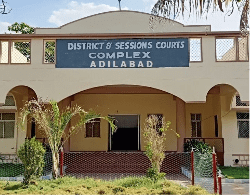
Complex 1
Adilabad district is a district located in the northern region of Telangana, India. it is known as the gateway district to South and Central India.[3] The town of Adilabad is its headquarters.[4] The district shares boundaries with Asifabad, Nirmal districts and with the state boundary of Maharashtra.
Historically, Adilabad was known as Edlabad during the rule of Qutub Shahis.[6] The district was named for Ali Adil Shah, sultan of Bijapur. The heavily forested Godavari basin[7] was inhabited during the Mesolithic and Paleolithic periods. Excavations have taken place in the surrounding areas of Luxettipet, Asifabad, Boath, Bhainsa, and Nirmal.[8]
Historically, Adilabad was known as Edlabad during the rule of Qutub Shahis.[6] The district was named for Ali Adil Shah, sultan of Bijapur. The heavily forested Godavari basin[7] was inhabited during the Mesolithic and Paleolithic periods. Excavations have taken place in the surrounding areas of Luxettipet, Asifabad, Boath, Bhainsa, and Nirmal.[8]
Historically, Adilabad was known as Edlabad during the rule of Qutub Shahis.[6] The district was named for Ali Adil Shah, sultan of Bijapur. The heavily forested Godavari basin[7] was inhabited during the Mesolithic and Paleolithic periods. Excavations have taken place in the surrounding areas of Luxettipet, Asifabad, Boath, Bhainsa, and Nirmal.[8]
Complex 2
Adilabad district is a district located in the northern region of Telangana, India. it is known as the gateway district to South and Central India.[3] The town of Adilabad is its headquarters.[4] The district shares boundaries with Asifabad, Nirmal districts and with the state boundary of Maharashtra.
Historically, Adilabad was known as Edlabad during the rule of Qutub Shahis.[6] The district was named for Ali Adil Shah, sultan of Bijapur. The heavily forested Godavari basin[7] was inhabited during the Mesolithic and Paleolithic periods. Excavations have taken place in the surrounding areas of Luxettipet, Asifabad, Boath, Bhainsa, and Nirmal.[8]
Historically, Adilabad was known as Edlabad during the rule of Qutub Shahis.[6] The district was named for Ali Adil Shah, sultan of Bijapur. The heavily forested Godavari basin[7] was inhabited during the Mesolithic and Paleolithic

Complex 3
Adilabad district is a district located in the northern region of Telangana, India. it is known as the gateway district to South and Central India.[3] The town of Adilabad is its headquarters.[4] The district shares boundaries with Asifabad, Nirmal districts and with the state boundary of Maharashtra.
Historically, Adilabad was known as Edlabad during the rule of Qutub Shahis.[6] The district was named for Ali Adil Shah, sultan of Bijapur. The heavily forested Godavari basin[7] was inhabited during the Mesolithic and Paleolithic periods. Excavations have taken place in the surrounding areas of Luxettipet, Asifabad, Boath, Bhainsa, and Nirmal.[8]
Historically, Adilabad was known as Edlabad during the rule of Qutub Shahis.[6] The district was named for Ali Adil Shah, sultan of Bijapur. The heavily forested Godavari basin[7] was inhabited during the Mesolithic and Paleolithic periods. Excavations have taken place in the surrounding areas of Luxettipet, Asifabad, Boath, Bhainsa, and Nirmal.[8]
Historically, Adilabad was known as Edlabad during the rule of Qutub Shahis.[6] The district was named for Ali Adil Shah, sultan of Bijapur. The heavily forested Godavari basin[7] was inhabited during the Mesolithic and Paleolithic periods. Excavations have taken place in the surrounding areas of Luxettipet, Asifabad, Boath, Bhainsa, and Nirmal.[8]